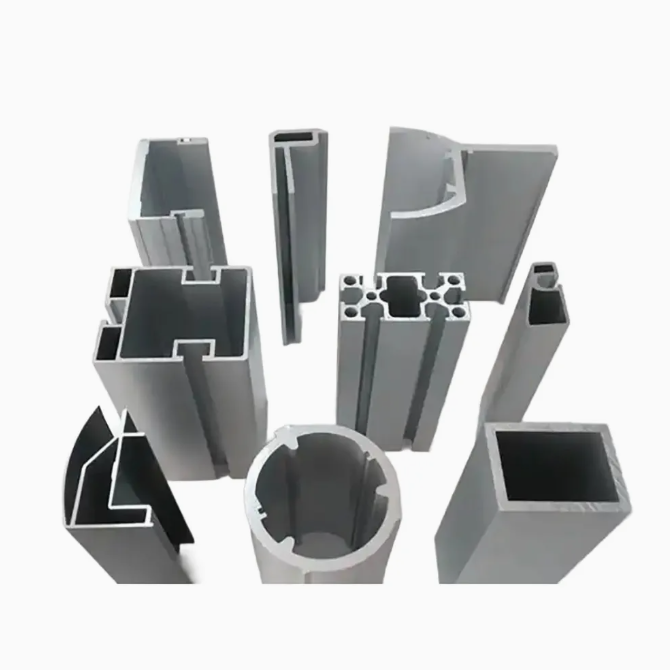
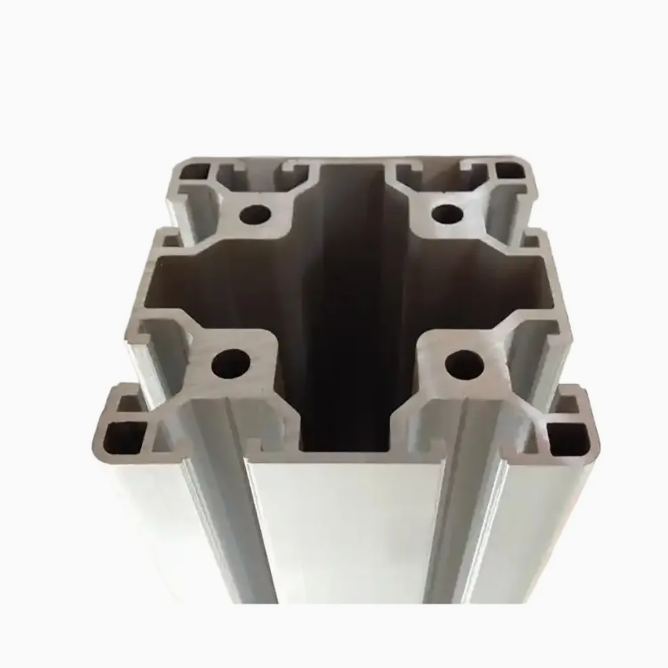
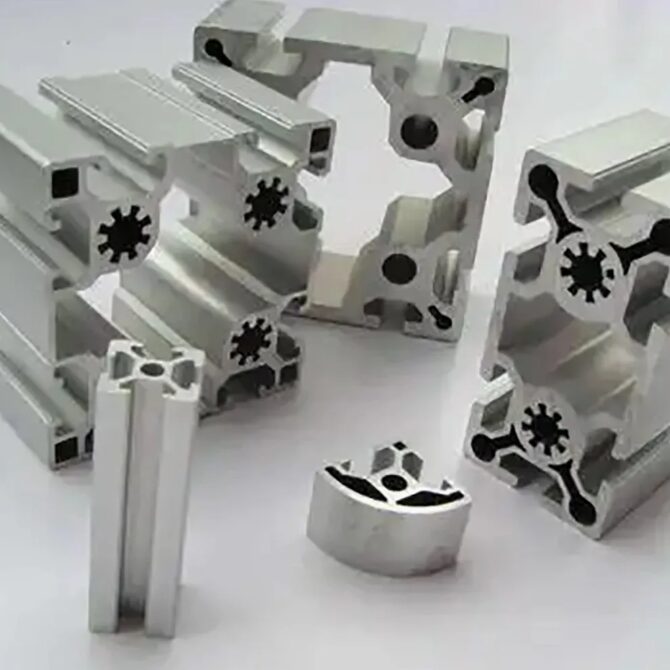
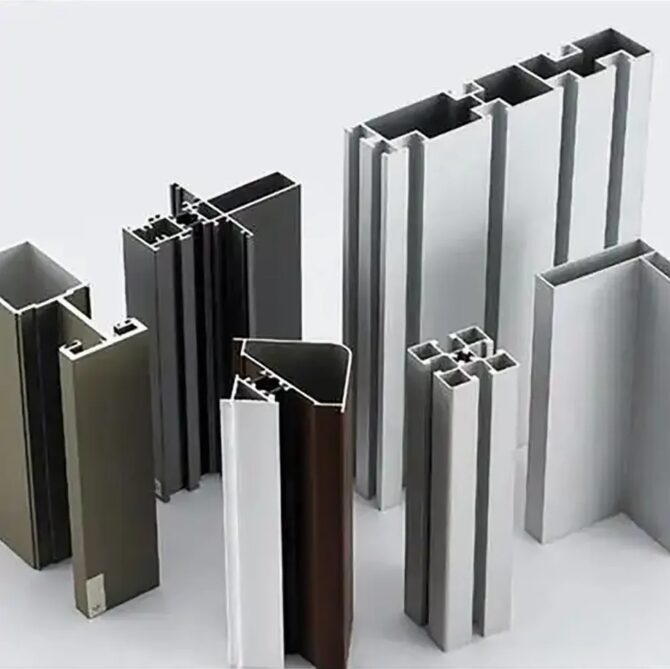
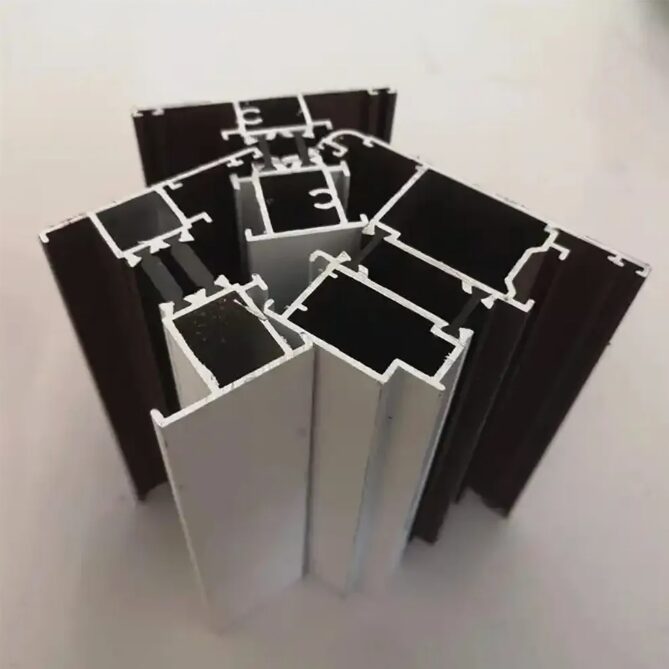
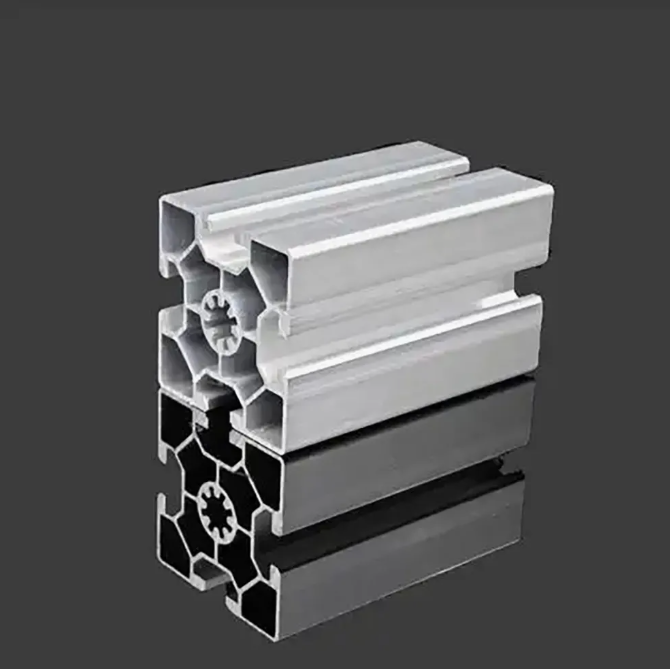
Алюминиевые профили — это профили, изготовленные из алюминиевых сплавов методами экструзии или волочения. Они легкие, высокопрочные, устойчивые к коррозии и простые в обработке, что делает их ключевым материалом в современном производстве.
Основные области применения:
Construction: Doors, windows, curtain walls, and facades – lightweight, durable, aesthetic, and easy to fabricate.
Home Furnishing: Furniture frames and supports such as desks, chairs, and bookshelves – enhancing stability and design.
Industrial Manufacturing: Equipment frames, transmission components, and assembly structures – convenient to install, eco-friendly, and durable.
Transportation: Automotive, railway, and aerospace components – lightweight for improved efficiency and safety.
New Energy & Power: Solar PV mounting systems, wind turbine support structures – reliable and corrosion-resistant for sustainable energy applications.
Блок-схемы процессов
1. (Melting & Casting) Aluminum ingots and alloying elements are melted in a furnace, refined to remove impurities and gas, then cast into cylindrical billets.
2. (Homogenization) Billets are heated in a homogenizing furnace to achieve a uniform microstructure and chemical composition, relieving internal stresses.
3. (Die Preparation) The high-strength steel die, manufactured to the profile’s cross-section, is preheated to a specific temperature for extrusion.
4. (Extrusion) Core Process: The heated billet is pushed through the die opening by a hydraulic ram, forcing it to take the shape of the die’s cross-section.
5. (Quenching) The extruded profile is rapidly cooled (with air or water) to “freeze” the metallic structure and achieve higher strength.
6. (Stretching & Straightening) The profile is stretched to straighten it, correct twisting, and align the grains to improve mechanical properties.
7. (Sawing) The straightened long bar is cut to the required commercial lengths.
8. (Aging) Profiles are heated in an aging oven for a period of time to precipitate strengthening compounds and achieve final mechanical properties (T5, T6 temper).
9. (Surface Treatment)(Anodizing)(Powder Coating)(Electrophoresis). Profiles undergo surface treatment as required. Anodizing (most common for corrosion/wear resistance and coloring), Powder Coating, or Electrophoresis are typical processes.
10. (Inspection & Packaging) Final inspection of dimensions, surface quality, and mechanical properties. Qualified products are packaged with protective film for shipment.